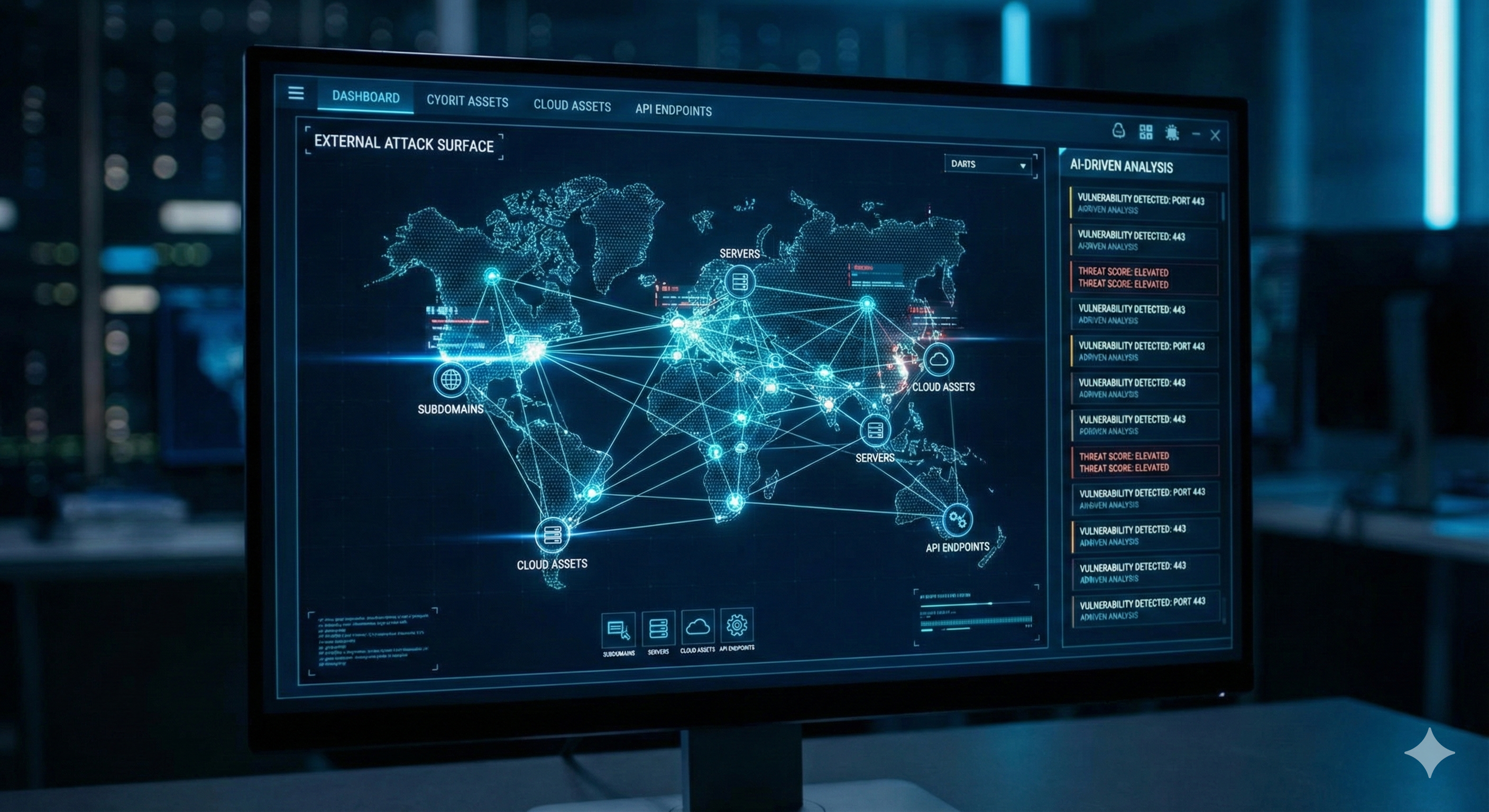
In cybersecurity, we’ve become comfortable with the idea that defense should be automated. Firewalls update themselves. SIEM systems correlate events in real-time. EDR platforms hunt threats autonomously. Yet when it comes to offensive security, the practice of thinking like an attacker to find vulnerabilities, most organizations still rely on manual penetration testing conducted once or twice a year.
This disconnect represents a massive opportunity cost. AI-assisted offensive security isn’t just about working faster; it fundamentally changes the economics of how organizations manage risk.
The Hidden Costs of Traditional Pentesting
Before we can appreciate the ROI of AI assistance, we need to understand the true cost of the status quo.
A typical external penetration test costs between $15,000 and $50,000, depending on scope and complexity. Most organizations conduct these annually, sometimes quarterly if they’re mature. But the invoice from your pentesting firm only tells part of the story.
Consider the operational overhead: coordinating schedules, defining scope, providing access, managing communications, reviewing findings, and tracking remediation. Security teams spend dozens of hours per engagement on coordination alone. Then there’s the waiting, weeks between when you request testing and when it actually begins, followed by more weeks waiting for the final report.
During all that time, your attack surface is changing. New code ships to production. Cloud infrastructure scales up and down. APIs get exposed. Employees join and leave. By the time you receive your pentest report, it’s already describing a system that no longer exists in quite the same form.
The real cost isn’t the money you spend on testing. It’s the risk you accumulate between tests.
What AI Assistance Actually Changes
AI-assisted offensive security platforms fundamentally alter this equation in three ways: frequency, coverage, and resource allocation.
Frequency becomes continuous rather than periodic. Instead of testing quarterly or annually, AI-assisted platforms can run reconnaissance and vulnerability analysis daily or even hourly. AI agents can autonomously execute complete pentesting workflows, planning attack strategies, conducting reconnaissance, identifying vulnerabilities, and even executing exploitation attempts. This means you detect exposure windows that might otherwise go unnoticed, that misconfigured S3 bucket that existed for three days, the forgotten admin panel that was accessible for a week, the vulnerable dependency that was exploitable for 48 hours before being patched.
Coverage expands dramatically. Human pentesters must prioritize ruthlessly given their time constraints. An AI-assisted platform can exhaustively enumerate your entire external attack surface, tracking every subdomain, every port, every service. It can monitor for new assets appearing in your infrastructure and immediately assess them. More importantly, AI can learn from each engagement, recognizing patterns and adapting its approach based on what it discovers about your environment. This is particularly valuable for organizations with complex, dynamic environments where shadow IT and forgotten assets create risk.
Resource allocation shifts from execution to strategy. Instead of spending time running Nmap scans and manually testing common vulnerabilities, your security team can focus on investigating the most critical findings, validating complex attack chains, and improving your overall security posture. The AI handles the repetitive reconnaissance and initial validation, while humans tackle the creative problem-solving that requires experience and intuition.
Quantifying the Value
Let’s look at the economics with a concrete example.
Consider a mid-sized technology company with a moderate external attack surface, perhaps 50 domains, 200 subdomains, and a handful of cloud services. Under the traditional model, they might conduct quarterly external pentests at $25,000 per engagement, totaling $100,000 annually. Add internal team time for coordination and remediation tracking, and the all-in cost approaches $120,000-$150,000.
With an AI-assisted offensive security platform running continuously, the annual cost might be $30,000-$50,000 depending on the solution and asset count. The immediate savings are obvious, but the real value compounds over time.
A vulnerability discovered 90 days earlier, the difference between quarterly testing and continuous monitoring, can prevent incident response costs that average $200,000-$500,000 for data breaches. It can prevent the reputational damage that causes customer churn. It can avoid the regulatory fines that accompany compliance failures.
But there’s another dimension to ROI that’s harder to quantify: the cost of NOT finding vulnerabilities. Every AI-assisted scan that finds nothing is still valuable, it’s confirmation that your controls are working, that recent changes haven’t introduced exposure, that your security posture remains strong. This continuous assurance has organizational value that extends beyond the security team to executives, board members, and customers.
The Risk Reduction Multiplier
Traditional pentesting creates a sawtooth pattern in your security posture. Right after a test, you’re at your strongest: vulnerabilities have been identified and remediated. But over time, as your environment changes and new issues emerge, risk accumulates until the next test cycle.
Continuous AI-assisted testing smooths this curve. Risk still exists, but the peaks are lower and the valleys are shallower. You’re never more than a day or two away from discovering a new exposure rather than potentially months.
This matters particularly for organizations facing sophisticated adversaries. Attackers don’t work on quarterly schedules. They continuously scan for opportunities and pivot quickly when new attack vectors emerge. In fact, attackers are increasingly using AI themselves to accelerate reconnaissance and vulnerability discovery. AI-assisted offense lets you match their tempo and leverage the same technological advantages.
The security industry has a saying: “Defenders have to be right every time; attackers only have to be right once.” Continuous AI-assisted testing doesn’t change this fundamental asymmetry, but it does narrow the window of opportunity for that one successful attack.
Beyond the Numbers
ROI calculations focus on quantifiable metrics, time saved, costs reduced, and incidents prevented. But AI-assisted offensive security delivers benefits that are hard to quantify.
There’s the psychological impact on your security team. When you’re testing continuously with AI assistance, you stop dreading the next pentest report. You’re not bracing for a list of 47 findings, many of which existed for months. Instead, you’re addressing issues incrementally, maintaining a steady state of security hygiene rather than lurching between crisis and complacency.
There’s the strategic advantage of better data. With continuous testing, you accumulate longitudinal metrics about your security posture. You can track the mean time to detection for different vulnerability classes. You can measure the effectiveness of security initiatives by observing how quickly similar issues recur. You can identify systemic weaknesses in your development lifecycle based on patterns in AI-generated findings. The AI itself learns from this data, improving its detection capabilities and reducing false positives over time.
And there’s the operational flexibility that comes from not being bottlenecked by pentester availability. During periods of rapid change, a major product launch, a cloud migration, an acquisition, you can maintain offensive security coverage without competing for scarce consulting resources. The AI scales effortlessly with your infrastructure.
The Intelligence Multiplier Effect
What truly distinguishes AI-assisted offense from traditional approaches is the intelligence multiplier effect. AI doesn’t just execute predefined playbooks—it adapts, learns, and reasons about your environment.
When an AI agent encounters a custom application, it can analyze its behavior, identify API endpoints, understand authentication mechanisms, and test for vulnerabilities specific to that implementation. It can chain together multiple observations to construct attack paths that might not be obvious from individual findings. It can prioritize its efforts based on likelihood of success and potential impact.
This cognitive capability means AI-assisted platforms find vulnerability classes that traditional scanners miss. They don’t just check for known CVEs; they reason about application logic, access controls, and data flows. They understand context in ways that pattern-matching tools cannot.
The result is deeper, more thorough security assessment without the exponential cost increase that would come from hiring enough human pentesters to achieve similar coverage.
Making the Transition
The shift from periodic to continuous AI-assisted offensive security isn’t just a technology decision—it’s a process change that requires organizational buy-in.
Start by identifying your current cost baseline. Include not just the pentesting invoice but all the associated overhead: internal time spent on coordination, the opportunity cost of delayed findings, and historical incident costs from vulnerabilities that could have been detected earlier.
Then evaluate AI-assisted platforms based on coverage, accuracy, and integration capabilities. The best solutions provide comprehensive reconnaissance, minimize false positives through intelligent validation, and integrate with your existing security workflow. They should complement, not replace, periodic human-led penetration tests that explore complex attack chains and test social engineering vectors. Think of AI as force multiplication for your security program, not a complete replacement for human expertise.
Finally, establish processes for continuous remediation. AI-assisted testing generates more findings, more frequently. You need workflows to triage, prioritize, and track these findings without overwhelming your team. This often means integrating with ticketing systems, establishing SLA targets for different severity levels, and creating dashboards that provide executive visibility into security posture trends.
The Competitive Advantage
In competitive markets, security isn’t just about preventing breaches, it’s about enabling business velocity. Organizations that can ship code faster while maintaining security rigor gain market advantage. Those that can confidently expand their attack surface to support new business initiatives outmaneuver competitors still paralyzed by security concerns.
AI-assisted offensive security makes this possible. It removes the tradeoff between speed and security by providing continuous validation that your controls are working. It lets you say yes to business initiatives while maintaining appropriate risk management.
The ROI of AI-assisted offense, then, isn’t just about saving money on penetration tests. It’s about fundamentally changing the economics of security: shifting from periodic, expensive, human-intensive validation to continuous, cost-effective, AI-enhanced assurance. It’s about detecting and remediating vulnerabilities in hours rather than months. It’s about freeing your security team to focus on strategic initiatives rather than repetitive manual testing.
Most importantly, it’s about staying ahead of attackers who are themselves using AI to find and exploit vulnerabilities at scale. In this arms race, AI assistance isn’t an advantage—it’s table stakes.
The question isn’t whether AI-assisted offensive security delivers ROI. The question is whether you can afford to keep accumulating risk between your quarterly pentests while your competitors are testing continuously with AI that never sleeps, never misses a detail, and learns from every engagement.
Ready to see how AI-assisted offensive testing can transform your security program?
With ServerSage, security teams run continuous adversary simulations, map real attack paths, validate OWASP risks automatically, and generate audit-ready evidence without waiting for the next pentest cycle.
Visit serversage.ai to learn more. Email contact@serversage.ai. for a walkthrough. Or message us on LinkedIn — we’d love to show you what AI-augmented offense looks like in practice
Serversage
Offensive Security Platform as a Service